


Santa Barraza b. 1951
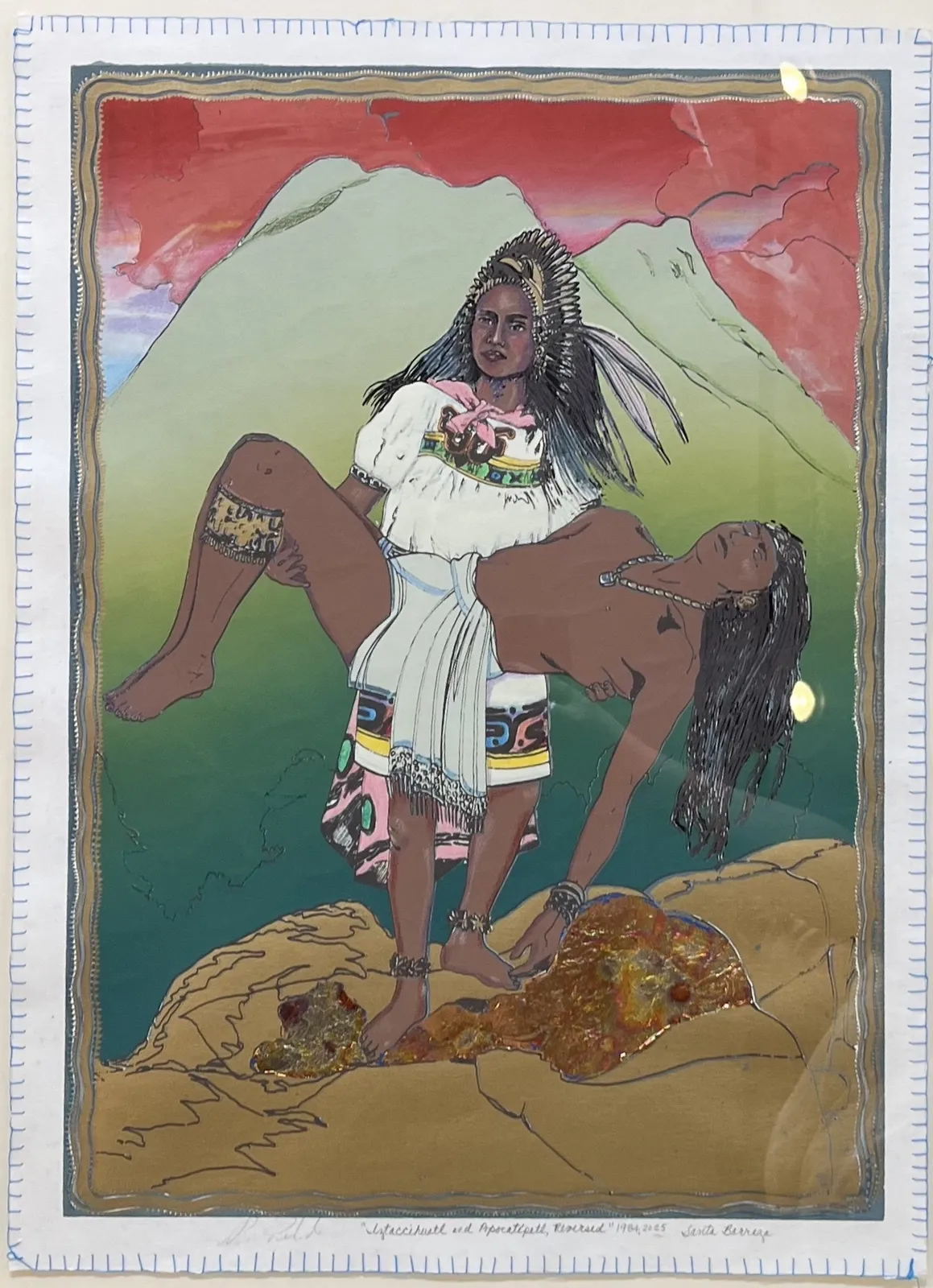
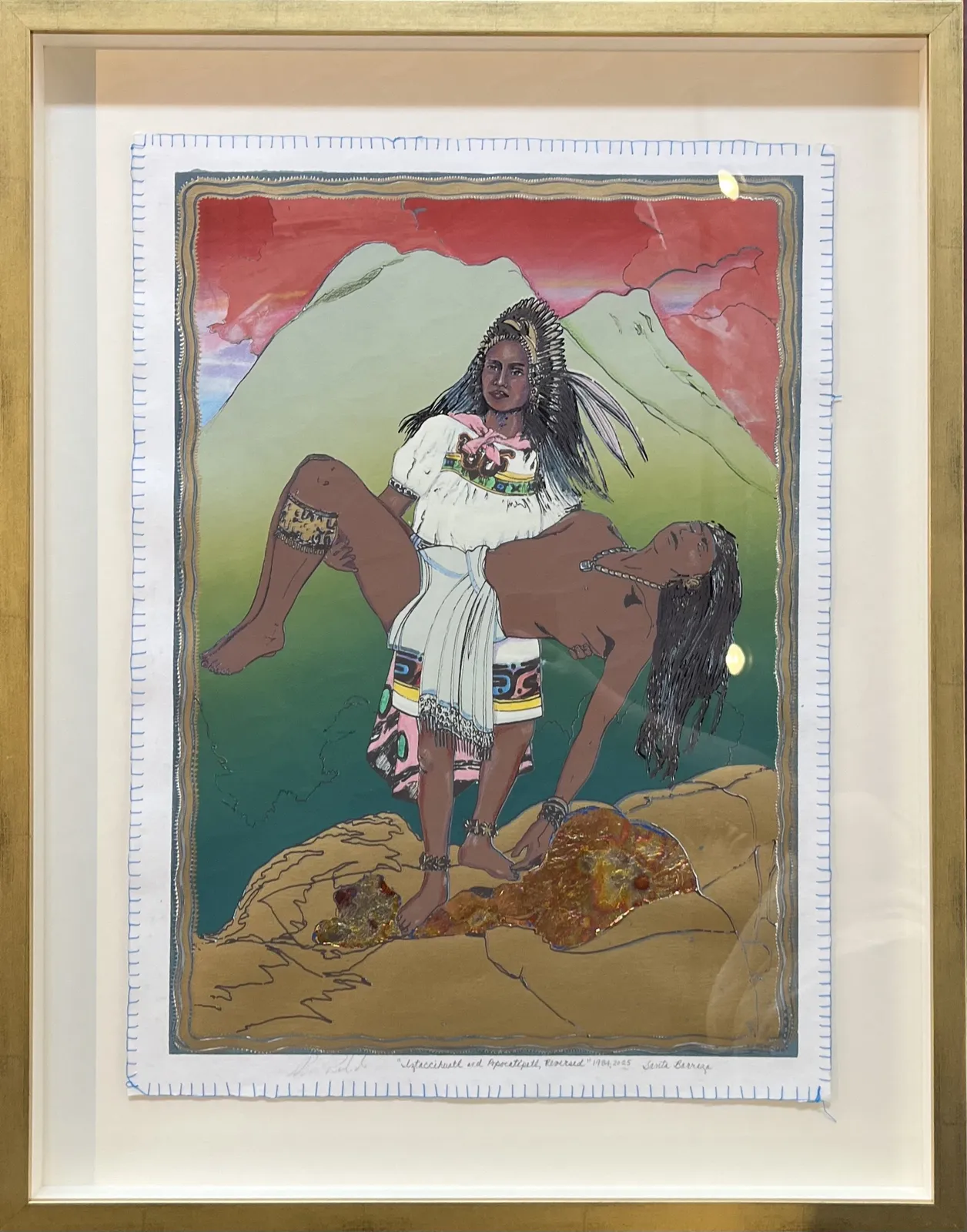
Iztaccihuatl and Popocatépetl, Reversed, 1984
Serigraph with prismapencils, hand-stitching, and foil leafing. Printed at Diseño Studios, Austin, TX
22 x 15 in
55.9 x 38.1 cm
55.9 x 38.1 cm
Unique print
Further images


Barraza asserts a new system of mythological gender roles through her visual manifestations of the Aztec legend. Here, she portrays a well-known love legend, with the narrative flipped on its...
Barraza asserts a new system of mythological gender roles through her visual manifestations of the Aztec legend. Here, she portrays a well-known love legend, with the narrative flipped on its head. Iztaccihuatl, a princess of unmatched beauty, carries her unconscious warrior-lover, Popocatépetl, in her arms. In the myth, Popocatépetl is told he might marry the princess on the condition that he returns from war alive. Tragically, someone falsely tells the princess that he has died in battle. Unable to bring herself to eat, she falls into a deep slumber from which she never awakens. Popocatépetl finds her, and, ill with grief, he carries her to a hilltop and lays her to rest, whereupon he never leaves her side. The myth says the two, over time, became the volcanoes that now bear their names (the volcanoes surrounding Mexico City). In reimagining these narratives, Barraza amplifies the feminine voice.
